
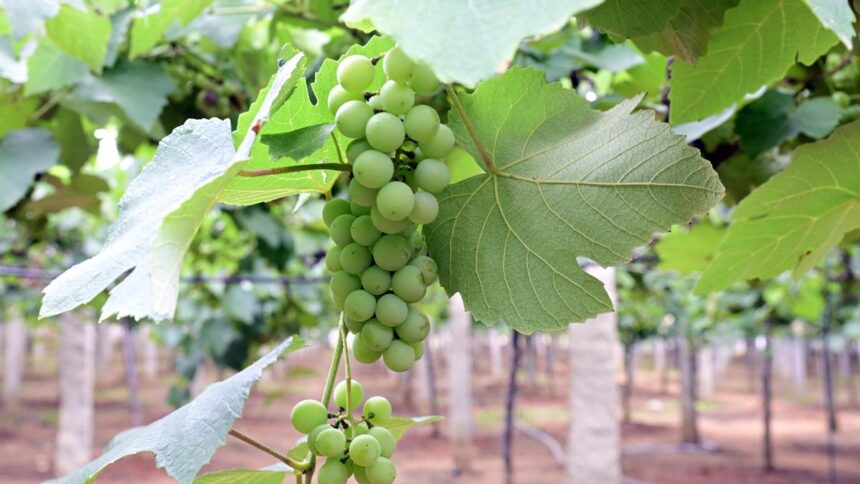
Bengaluru’s traditional horticultural crops, once synonymous with the region’s identity, are steadily disappearing as rapid urban expansion, changing weather patterns, and declining water availability reshape the agricultural landscape around the city.
Fruits such as the Bangalore Blue grape, Devanahalli chakota (pomelo), and locally grown guava were once widely cultivated in villages surrounding Bengaluru. However, the area under cultivation has shrunk significantly over the years as agricultural land has increasingly been converted into residential and commercial developments.
Farmers say that the rising demand for land, coupled with erratic rainfall and limited access to water for irrigation, has made it difficult to sustain traditional horticulture. Many have either shifted to other occupations or sold their farmland for urban development.
Ramachandra Gowda, a 60-year-old farmer from Bettahalasur, continues to cultivate grapes on his two-acre vineyard despite the changing landscape. He recalls a time when the region was known for extensive vineyards, vegetable farms, and betel leaf cultivation. Today, only a handful of farmers continue to grow these traditional crops as multi-storey buildings replace agricultural fields.
The decline of Bengaluru’s signature fruits highlights the broader challenges facing peri-urban agriculture, where rapid urbanisation and environmental pressures are threatening the region’s rich horticultural heritage.